






Sale!
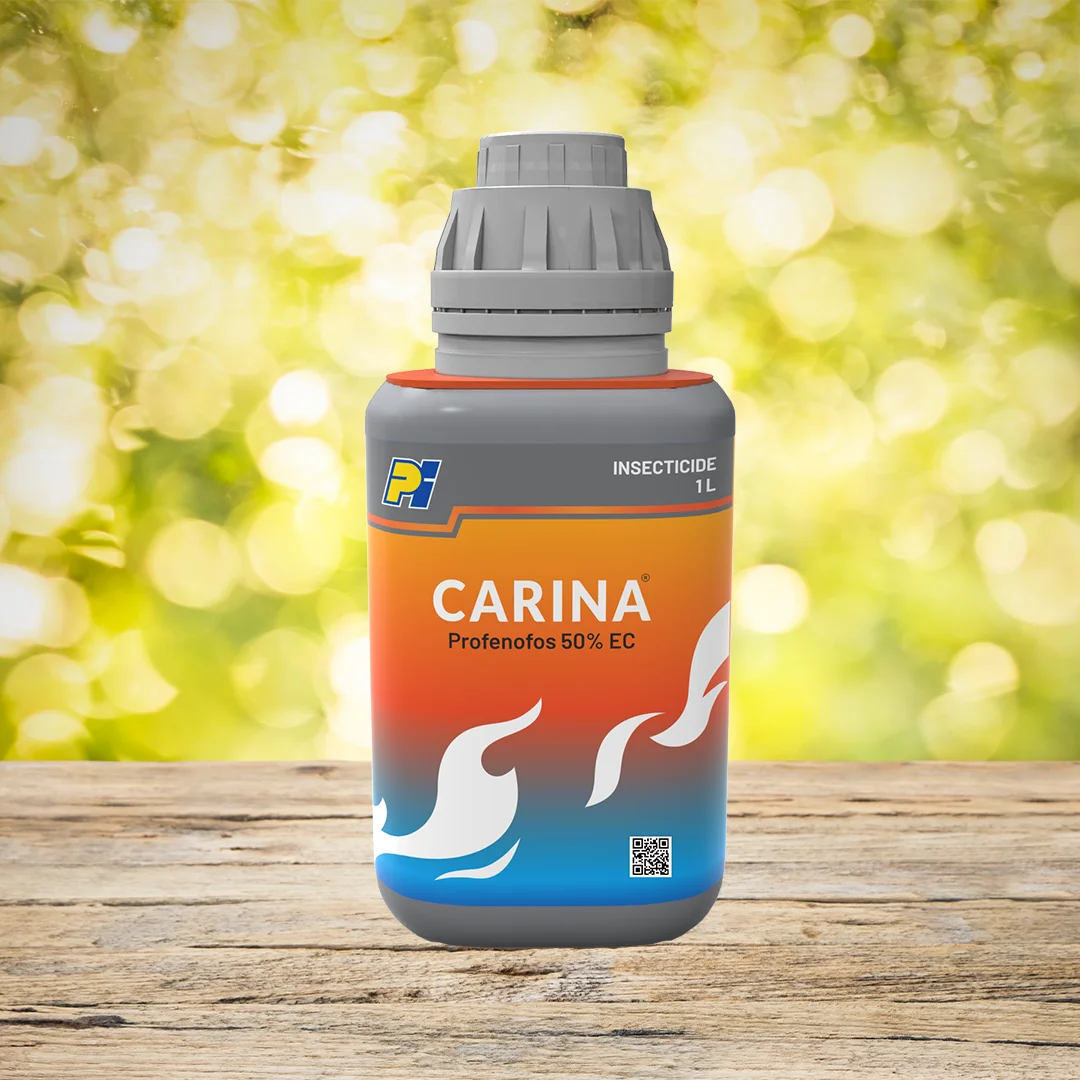
CARINA
₹399.00 – ₹799.00
CARINA is a broad spectrum organophosphate insecticide and acaricide. CARINA is based on the high quality Profenofos technical manufactured by PI Industries Ltd., PI Industries is the world’s second largest producer of Profenofos technical.
Features & Benefits
- Ovicidal & Larvicidal action- Faster and longer suppression of pest population
- Broad Spectrum-Works on wide range of chewing and sucking pest.
- Translaminar action- Controls the pest which are present on lower side of leaf
Method of Application
- It can be applied by both high volume and low volume spray equipment.
- Water dilution depends on the type of sprayer to be used, crop stage and intensity of pest infestation.
- It is desirable to calibrate beforehand to estimate the quantity of water needed for preparation of solution.
- Prepare homogeneous solution by agitating with stick. Always spray in the direction of wind and apply uniformly with complete coverage.
- Interval between two sprays should be 10 to 15 days. No undesirable residues are noticed in different plant parts if used as directed.
| Crops | Target Pests | Dosage g a.i./ha | Dosage Formulation gram or ml/ha | PHI Level |
|---|---|---|---|---|
| Cotton | Bollworms (Heliothis), Aphids, Jassids, White flies, Thrips | Cotton (Bollworm): 750 – 1000 g a.i./ha, Cotton (Jassids, Aphids, Thrips and whitefly): 500 g a.i./ha | Cotton (Bollworms): 1500 – 2000 ml/ha; Cotton (Aphids, Thrips, Jassids, White fly): 1000 ml/ha | 15 |
| Soybean | Semilooper (Chrysodeixis acuta), Girdle beetle (Obereopsis brevis) | Soybean: 500 g a.i./ha | Soybean: 1000 ml/ha | 40 |
Antidote
|
Precautions
|
| Mode of Action
CARINA with its unique mode of action has superior advantages over several other products. As a member of the organophosphate family of insecticides, CARINA works by potent inhibition of the enzyme acetyl cholinesterase, which is essential for the transmission of impulses between nerve cells. After feeding on a CARINA-treated plant or crawling over a treated leaf, the pest is first paralyzed and then quickly dies. |
Toxicity Triangle
Yellow triangle, Highly toxic. |
| size | 1 Ltr, 500 ML |
|---|


 Home
Home  Whishlist
  Compare
  Checkout
  Account