






Product Name
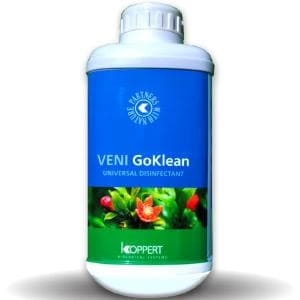
Koppert Veni GoKlean
Sometimes marketed as an eco-friendly universal disinfectant / agri-sterilizer.
Purpose / Use Cases
-
Soil disinfection (pre-sowing) to reduce soilborne pathogens (fungi, bacteria, viruses) .
-
Disinfection of plants (foliar / surface) to curb pathogens during growth or post-infection stage .
-
Post-harvest treatment (for produce, packaging, storage, containers) to extend shelf life by reducing microbial load .
-
Useful in integrated disease management, for example in managing bacterial wilt when combined with reintroduction of beneficial microbes (as per trials by Koppert) .
Composition & Mode of Action
-
Active ingredients:
• Colloidal Silver — 100 ppm .
• Colloidal Copper — 100 ppm. -
Carrier: water, with the silver and copper encapsulated in a biopolymer (ketozen) to stabilize them and control release.
-
How it works:
• The colloidal metal particles exert a “cold-injury” effect on microbial cells (i.e. physical or oxidative damage).
• They disrupt microbial metabolism and reproduction, thereby inhibiting growth or killing the pathogens. -
The silver + copper combination is considered synergistic: more effective together than alone.
Features & Advantages
-
Broad spectrum: effective against a wide range of fungi, bacteria, viruses (both soilborne and airborne).
-
Eco-friendly / safe: claimed to be non-carcinogenic, non-mutagenic, and free from chlorine. Leaves no harmful residues.
-
Stable & durable: encapsulation helps sustain the active agents, making the effect longer lasting.
-
Non-toxic / non-hazardous: no re-entry barrier (i.e. people don’t need to wait long before entering after application) .
-
Compatibility: compatible with many agrochemicals (but not recommended to mix with microbial bio-pesticides or biofertilizers) .
-
Insensitive to water quality: hardness, salinity, pH in the water don’t significantly reduce its efficacy.
-
Shelf life: stable for about 24 months under proper storage.
Application / Usage Instructions
-
Dosages:
• Spray / foliar: 1.25 – 1.5 ml per liter of water .
• Drenching / soil: 2 – 3 ml per liter of water .
• Tuber / rhizome / planting material treatment: 5 ml per liter (some sources quote 25 ml per liter for heavy treatment) . -
Method of application: via drip irrigation, foliar sprays, drenching methods as per crop and disease target.
-
Timing / use cases:
• Pre-sowing soil treatment to reduce pathogen load .
• During crop growth when disease threat is present .
• After harvest (on produce, containers, storage) to extend shelf life. -
Compatibility caution: Do not mix with microbial biopesticides / biofertilizers (because biocontrol organisms may be harmed by the disinfectant action).
Limitations / Considerations / Side Effects
-
While it is claimed to be non-toxic to mammals and plants when used correctly, misuse (overdose, undiluted use) may cause phytotoxicity (damage to plant tissues) — standard with any disinfectant / metal compound.
-
Not effective or recommended to be used simultaneously with living beneficial microbes (as it may kill them).
-
For optimal disease control (especially for soil diseases), often used in combination with recolonization of beneficial microbes (as Koppert trials used Veni GoKlean + Vici Routz) .
-
Must abide by local regulations / permitted usage in your region (check registration, crop approvals, maximum residues, etc.).
Performance / Results / Trials
-
In India trials, the combination strategy (soil disinfection with Veni GoKlean + then reintroduction of beneficial soil microbes) achieved 60–70% higher yields vs conventional farmers’ practice for tomato (in context of bacterial wilt control)
-
The strategy also had 30% lower cost of disease management compared to conventional chemical methods in those trials.



 Home
Home  Whishlist
  Compare
  Checkout
  Account